
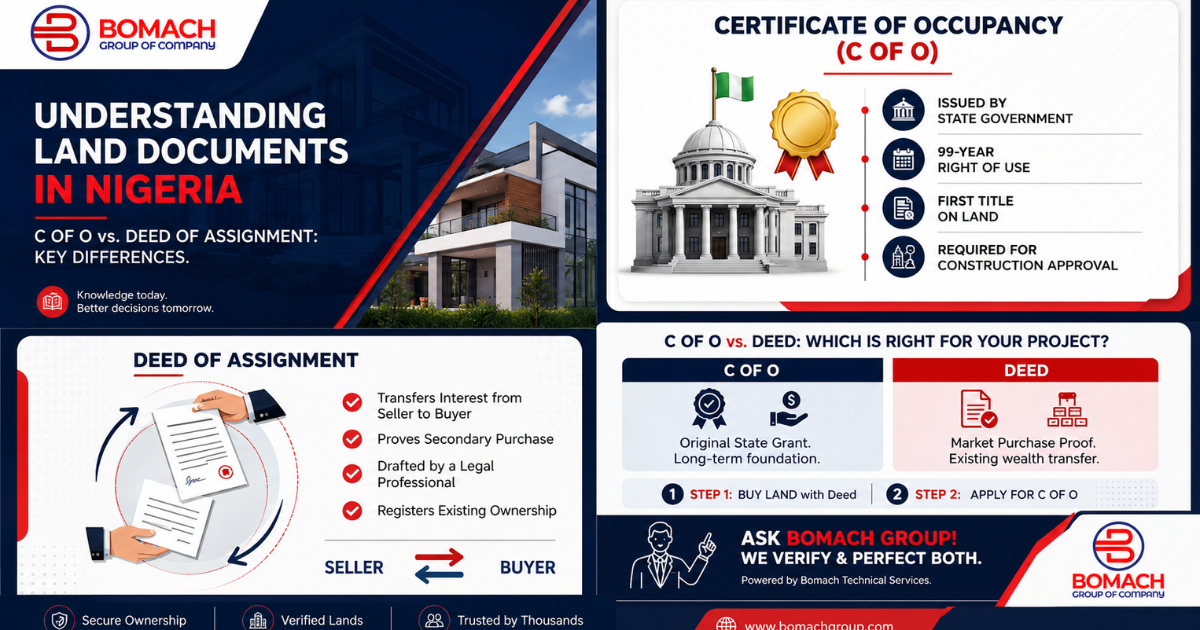
Difference Between C of O and Deed of Assignment in Nigeria
In Nigeria’s real estate market, two of the most commonly misunderstood land documents are the Certificate of Occupancy (C of O) and the Deed of Assignment. Many property buyers assume they mean the same thing, but they serve completely different legal purposes.
Understanding the difference between these two documents can save you from costly mistakes, fake land transactions, ownership disputes, and future legal problems.
Whether you are buying land in Enugu or anywhere else in Nigeria, this guide will help you understand what each document means, how they work, and why both are important in property transactions.
What is a Certificate of Occupancy (C of O)?
A Certificate of Occupancy, popularly called a C of O, is an official land document issued by the state government. It confirms that the holder has the legal right to occupy and use a particular piece of land for a specified period, usually 99 years. (resolutionlawng.com)
Under the Nigerian Land Use Act of 1978, all lands in a state are controlled by the Governor, who has the authority to grant occupancy rights through a C of O. (resolutionlawng.com)
A C of O typically contains:
The owner’s name
Location and description of the land
Size and boundaries
Purpose of the land (residential, commercial, agricultural, etc.)
Certificate number
ment signatures and seal
A C of O is often regarded as one of the strongest forms of land title in Nigeria because it shows government recognition of ownership rights. (dotsiteglobal.com)
What is a Deed of Assignment?
A Deed of Assignment is a legal document used to transfer ownership or interest in a property from one person (the seller) to another person (the buyer). (resolutionlawng.com)
Unlike a C of O, which comes from the government, a Deed of Assignment is an agreement between private parties involved in a property transaction. It is usually prepared by lawyers and signed after payment for the property has been completed. (The Firma Law Practice)
A Deed of Assignment contains:
Details of the buyer and seller
Description of the property
Agreed purchase amount
Date of transfer
Terms and conditions of the transaction
Signatures of parties and witnesses
The Deed of Assignment serves as proof that ownership has changed hands. However, it must be registered at the Land Registry and usually requires Governor’s Consent before the title is fully perfected. (resolutionlawng.com)
Major Differences Between C of O and Deed of Assignment
1. Who Issues the Document?
The biggest difference lies in who issues the document.
A C of O is issued by the state government. (resolutionlawng.com)
A Deed of Assignment is created and signed by private individuals involved in a property transaction. (Lands Of Nigeria)
Simply put:
Government gives you a C of O.
A seller transfers property to you through a Deed of Assignment.
2. Purpose of the Document
A C of O grants the legal right to occupy and use land. (Lands Of Nigeria)
A Deed of Assignment records the transfer of ownership from one person to another. (resolutionlawng.com)
Think of it this way:
The C of O establishes government recognition.
The Deed of Assignment confirms the transaction between buyer and seller.
3. Duration and Validity
A C of O is usually valid for 99 years, after which renewal may be required. (resolutionlawng.com)
A Deed of Assignment does not create a fresh 99-year term. Instead, it transfers whatever unexpired interest already exists on the land. (The Firma Law Practice)
4. Role in Property Transactions
If land is being allocated directly by the government, the buyer receives a C of O.
But if the land is being sold by an existing owner to another buyer, the transaction is completed with a Deed of Assignment. (Lands Of Nigeria)
This means:
First ownership often comes with a C of O.
Resale transactions usually involve a Deed of Assignment. 5. Registration Requirements
A Deed of Assignment must be stamped, registered, and perfected at the Land Registry to become legally enforceable. (resolutionlawng.com)
A C of O, on the other hand, is already an officially recognized government title document once issued. (Bullionrise Consult)
6. Revocation
A Certificate of Occupancy can be revoked by the government for overriding public interest under the Land Use Act. (resolutionlawng.com)
Can a Property Have Both Documents?
Yes, and in many cases, it should.
For example:
A piece of land may originally have a C of O issued by the government.
When the owner sells the land, a Deed of Assignment is used to transfer ownership to the new buyer.
The buyer then processes the Governor’s Consent to legally update the ownership records. (Lands Of Nigeria)
This is why experienced property buyers usually request:
The original C of O
The Deed of Assignment
Survey Plan
Governor’s Consent (where applicable)
Which is More Important?
The truth is that both documents are important, but they serve different purposes.
A C of O proves government recognition of land rights, while a Deed of Assignment proves that ownership has been legally transferred from one party to another. (resolutionlawng.com)
In many Nigerian property transactions, having only one document may not be enough. Proper verification and legal due diligence are essential before making payment for any land.
Common Mistakes Buyers Make
Many buyers make the mistake of:
Buying land without verifying the authenticity of the C of O
Accepting an unsigned Deed of Assignment
Failing to register land documents
Ignoring Governor’s Consent
Assuming a receipt alone proves ownership
These mistakes can lead to land disputes, government acquisition issues, or outright fraud.
The Simple Difference Between the Two Documents
A very easy way to understand it is this:
Certificate of Occupancy (C of O). Deed of Assignment
Issued by the government. Signed between buyer and seller
Shows legal right to occupy land. Shows transfer of ownership
Usually, the first land title. Used during resale transactions
Government-backed document. Contract/agreement document
Proves government recognition. Proves the property was sold
Final Thoughts
Buying land in Nigeria is a major investment, and understanding your title documents is one of the smartest steps you can take.
A Certificate of Occupancy (C of O) gives government-backed occupancy rights, while a Deed of Assignment legally transfers ownership from seller to buyer. Both documents work hand in hand in many real estate transactions.
Before buying any property, always:
Verify all documents
Conduct proper land searches
Confirm ownership history
Work with qualified real estate professionals and property lawyers
In real estate, proper documentation is not just paperwork; it is your protection.