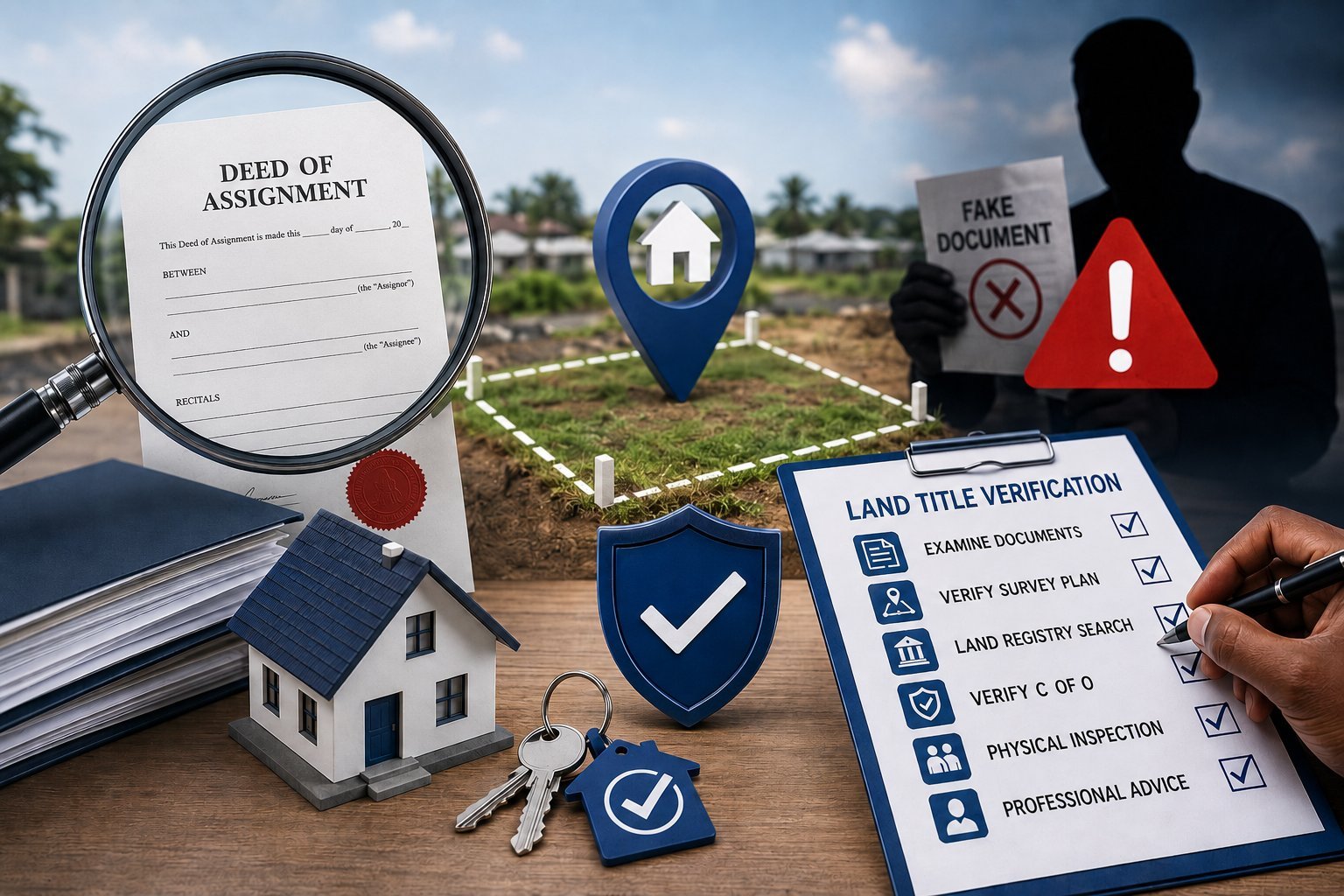
How to Conduct Land Title Verification in Nigeria: The Smart Buyer’s Guide to Avoiding Land Fraud
“The Land Was Cheap… But the Mistake Was Expensive”
In 2023, Emeka finally saved enough money to buy his first piece of land. He had spent years dreaming about owning a property he could build on and leave as an investment for his children.
One day, a friend introduced him to a seller offering a plot of land at a price far below the market value. The seller had documents, spoke confidently, and even promised a quick transaction.
Excited by the opportunity, Emeka paid without conducting proper land title verification.
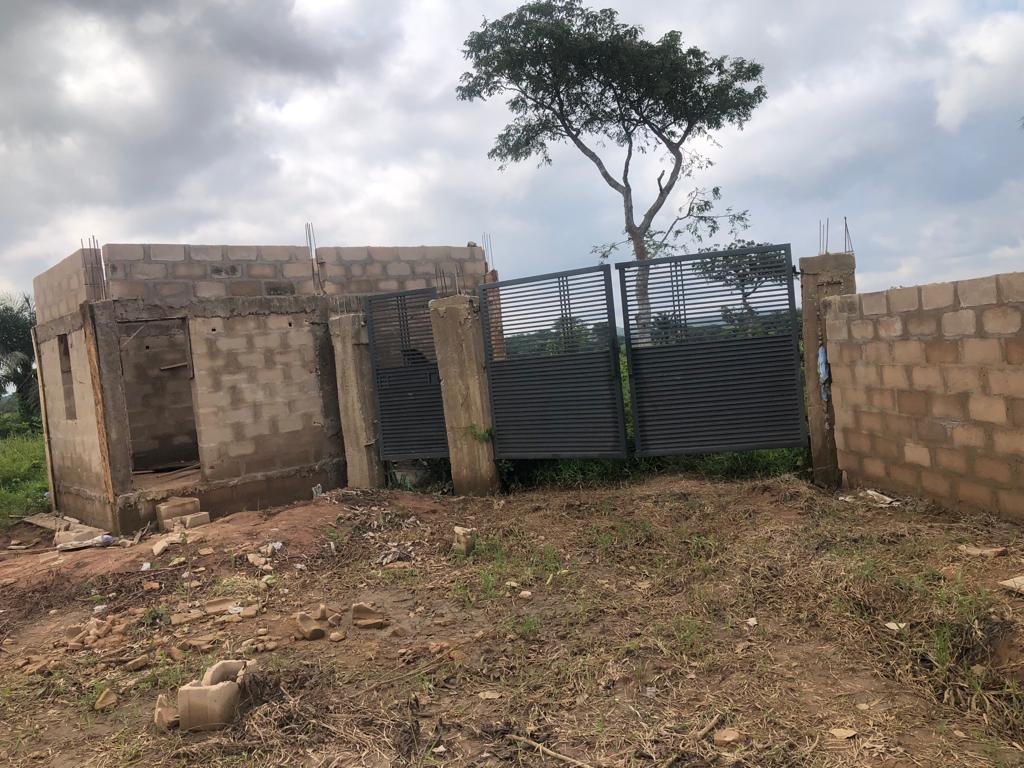
Months later, when he started making plans to fence the property, another family appeared claiming ownership of the same land. A visit to the land registry revealed the painful truth—the documents he received were either defective or did not give him a valid ownership interest.
His dream investment turned into a legal battle.
Unfortunately, Emeka’s story is not uncommon in Nigeria.
Every year, many individuals lose millions of naira because they fail to conduct proper land title verification before purchasing property.
The good news? These mistakes can be avoided.
This guide explains how to verify land titles in Nigeria, the steps involved, and how you can protect yourself from fraudulent land transactions.
What Is Land Title Verification?
Land title verification is the process of confirming that a piece of land is genuine, legally owned by the person selling it, and free from disputes, government acquisition, or any legal restrictions.
It involves checking the land documents, confirming records at government land agencies, and carrying out physical investigations to ensure that the property is safe for purchase.
Simply put:
Do not buy land because you have seen a document. Buy land because the document has been verified.
Why Is Land Title Verification Important in Nigeria?
Land verification protects you from:
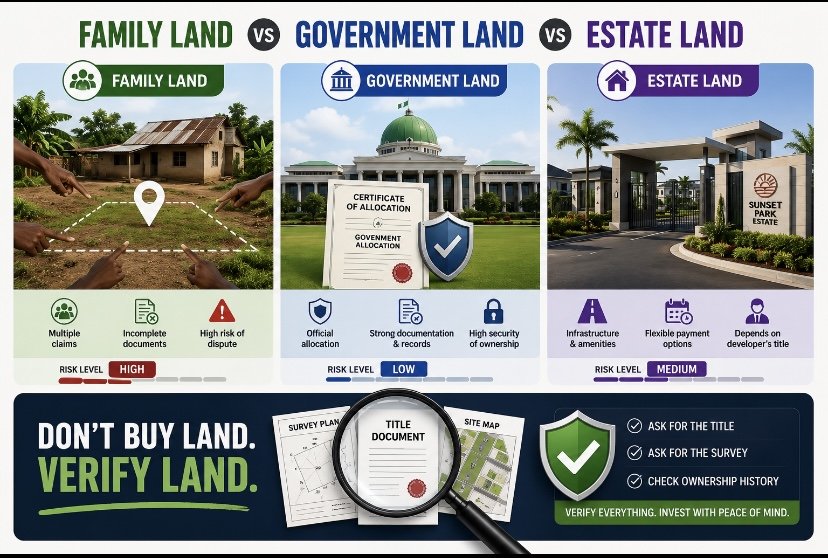
Buying land from someone who does not have the legal right to sell.
Purchasing land that is under government acquisition.
Buying property involved in family disputes or court cases.
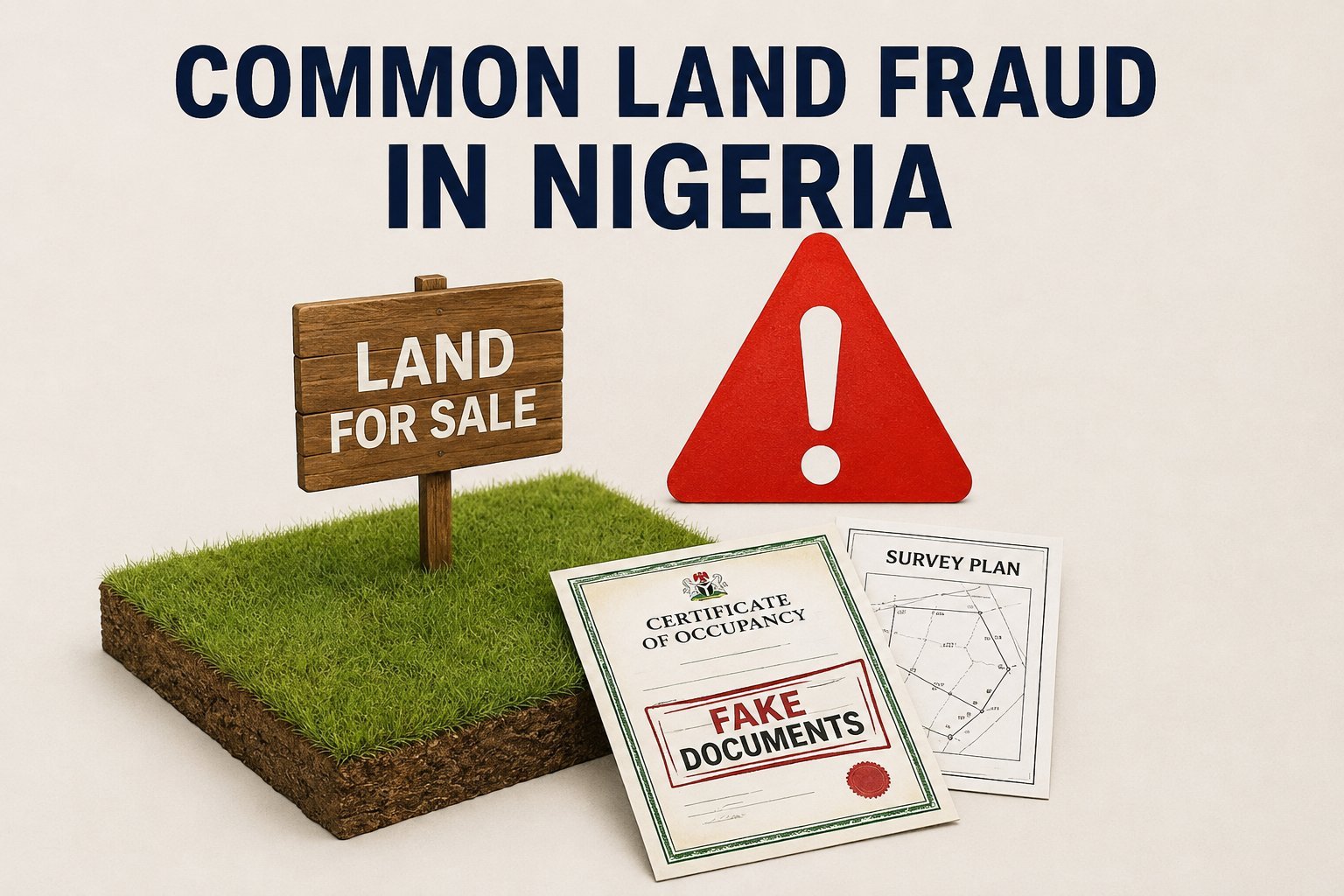
Receiving fake or forged land documents.
Losing your money to land scammers.
A beautiful document means nothing if it cannot be traced and confirmed by the appropriate authority.
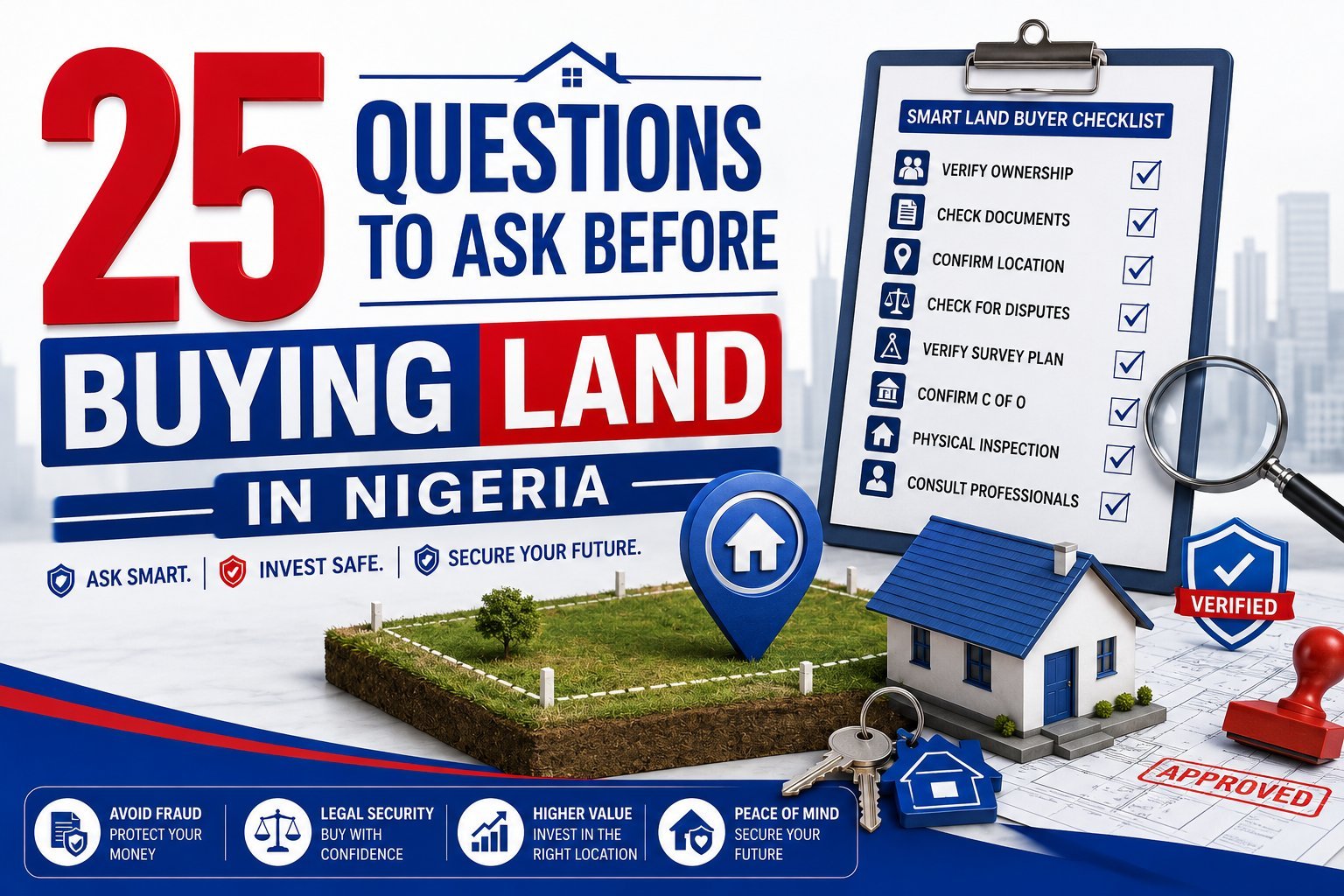
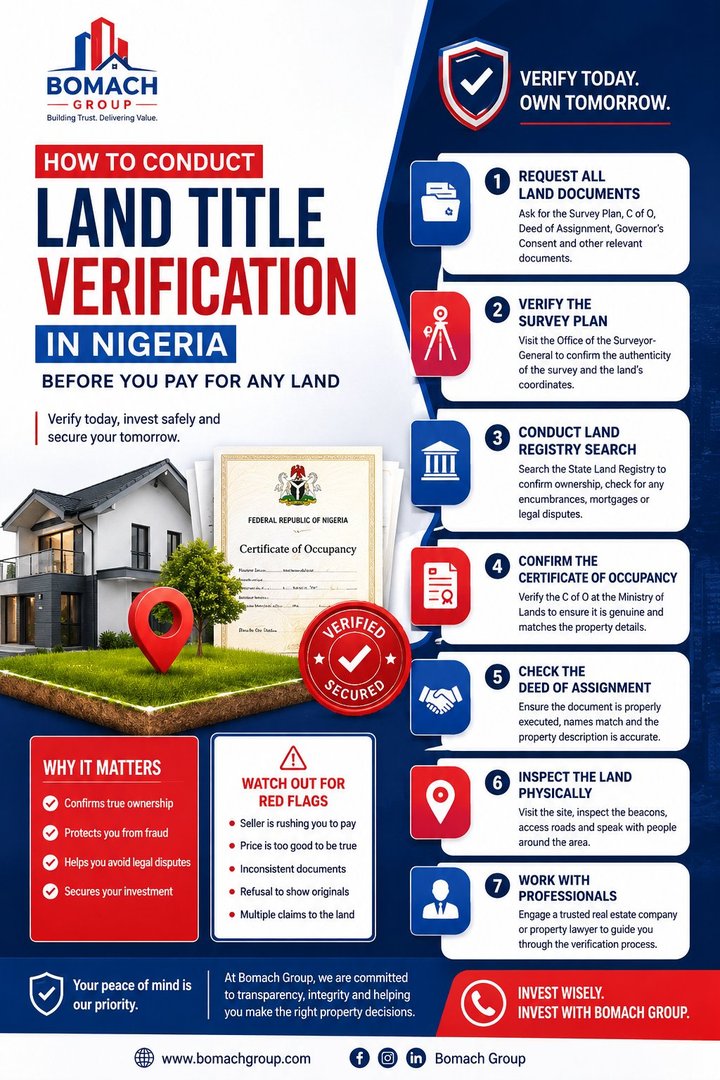
Step-by-Step Process of Conducting Land Title Verification in Nigeria
1. Request and Examine the Land Documents
The first step is to ask the seller for all available documents relating to the property.
Common land documents in Nigeria include:
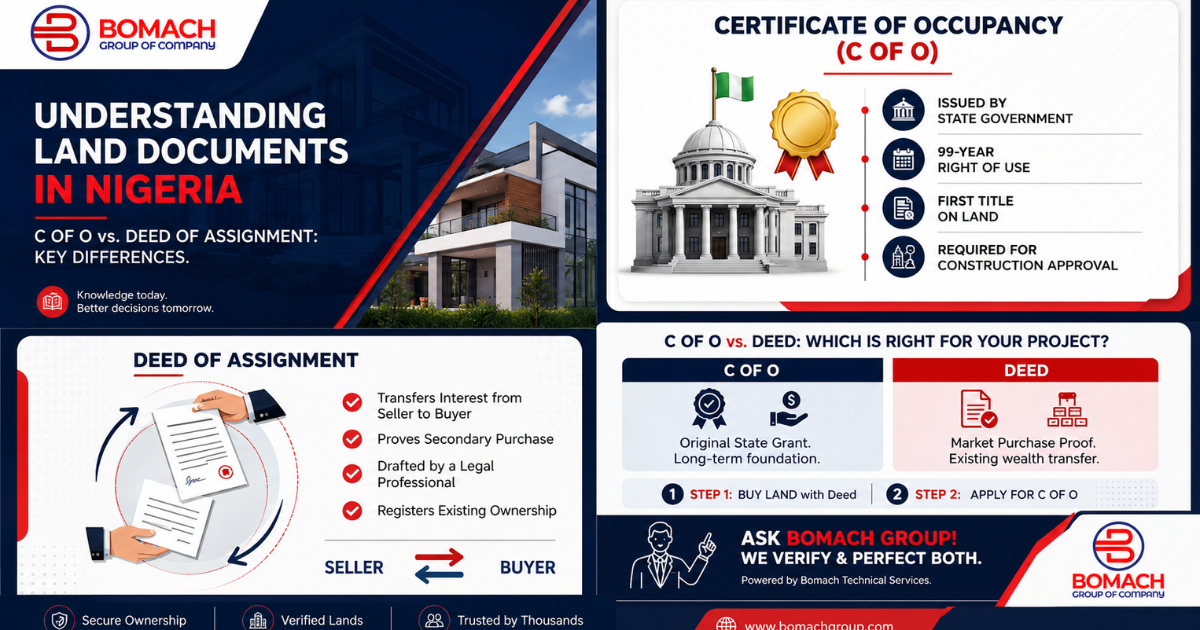
Certificate of Occupancy (C of O)
Deed of Assignment
Registered Survey Plan
Deed of Lease
Governor’s Consent
Excision and Gazette (for certain lands)
Do not just collect these documents. Carefully check details such as:
The name of the owner.
The size and location of the land.
The survey coordinates.
The dates and signatures.
Registration details.
Any inconsistency should raise concern.
2. Verify the Survey Plan
A registered survey plan helps identify the exact location and boundaries of the land.
A licensed surveyor can use the survey details and coordinates to confirm:
The true location of the land.
Whether the land falls within a government-acquired area.
Whether it has any known restrictions.
Many land disputes occur because buyers fail to verify the survey plan before payment.
3. Conduct a Search at the Land Registry
This is one of the most important stages of land title verification.
A search at the relevant state land registry helps confirm:
The true owner of the property.
Whether the title document is genuine.
If the land has been registered.
Whether there are existing claims or encumbrances.
For example, land searches may be conducted at the state land registry where the property is located, such as the Lagos State Land Registry, the Federal Capital Territory land administration system in Abuja, or the appropriate land agency in other states.
4. Verify the Certificate of Occupancy (C of O) or Other Titles
If the land has a Certificate of Occupancy or any government-issued title, the details should be verified with the authority that issued it.
This confirms whether:
The title number is authentic.
The registered owner matches the seller.
The document has not been cancelled or altered.
Never rely solely on photocopies or scanned documents.
5. Investigate the Land Physically
Document verification is important, but physical inspection is equally necessary.
Visit the land and make inquiries from:
Neighbours.
Community leaders.
Nearby property owners.
Local authorities where necessary.
Ask questions such as:
Is there any dispute over this land?
Has anyone else claimed ownership?
Has the land been sold before?
The answers may reveal issues that documents cannot show.
6. Engage a Property Lawyer and Other Professionals
Buying land is a major financial decision, and professional guidance can save you from expensive mistakes.
A qualified property lawyer can:
Review title documents.
Conduct legal searches.
Identify risks in the transaction.
Prepare and review agreements.
You may also need a licensed surveyor to confirm the survey and boundaries.
Red Flags to Watch Out for When Buying Land
Be careful when you notice any of these signs:
🚩 The seller refuses to provide original documents.
🚩 The price is significantly cheaper than similar properties around the area.
🚩 The seller pressures you to make immediate payment.
🚩 The names on the documents do not match the seller’s identity.
🚩 There are unresolved family or community disputes.
🚩 The seller discourages you from conducting verification.
Remember: A genuine seller will not be afraid of proper verification.
How Long Does Land Title Verification Take?
The time required depends on the location of the property, the type of title, and the efficiency of the relevant government agency.
Basic checks may take a few days, while comprehensive searches involving government records and professional investigations may take longer.
The time spent verifying is always better than spending years fighting a land dispute.
Final Thoughts: Verify First, Invest With Confidence
Land remains one of the most valuable investments you can own in Nigeria, but every profitable investment must begin with proper due diligence.
Do not allow excitement, cheap prices, or pressure from a seller to make you skip the verification process.
Before you pay for any property, confirm the documents, verify the survey, conduct searches, inspect the land, and seek professional advice.
The smartest land buyers are not those who buy quickly; they are those who verify carefully.
At Bomach Group, we believe that every property investment should be built on trust, transparency, and proper documentation. We encourage every investor to carry out the necessary checks and make informed decisions before acquiring any property.
A verified land today is a secured investment for tomorrow.